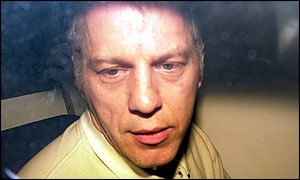
R v Michael John Stone |
|||
|
|||
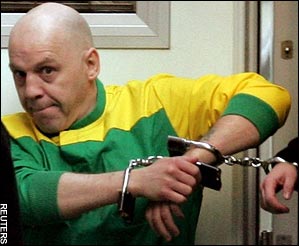
Convicted of Murder"This is
the most horrific and terrible murder I have had the misfortune to come across "The nature of this offence makes it almost unique." Detective Chief Inspector Dave Stevens. Kent Police - 11th July 1996. "We were looking for a maniac and we found one - Stone is a maniac. He never admitted anything, but I have no doubt he was responsible." (1997).
|
|||
|
|||
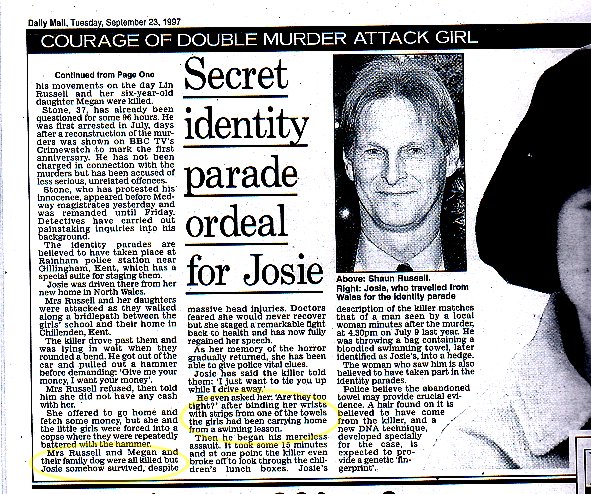
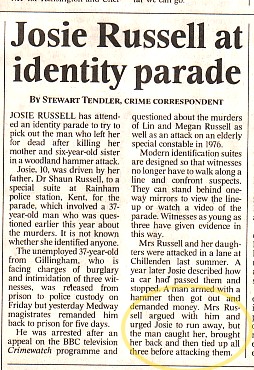
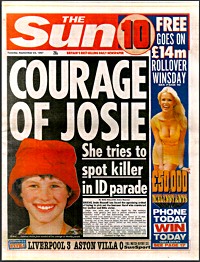
The Prosecution. "The evidence of the main prosecution witness Damien Daley should not be dismissed just because he is a self- confessed liar." - Mr Justice Poole. Michael Stone was twice convicted of murder on the strength of an alleged confession to another prisoner, which merely repeated facts that were in the public domain. He was arrested on 17th July 1997 just over a year following the crime as a result of a tip-off from his psychiatrist who believed the police e-fit looked familiar. Stone denied any knowledge of the crime and was remanded in custody while an ID parade was arranged. On 23rd September 1997, following his request to the prison Governor to be moved to the segregation unit to 'escape from prisoners who were making up stories about his involvement in the crime', he was placed in a cell next to a heroin addict named Damien Daley, who later admitted in court to being an accomplished liar "in order to get by in life." In the evening Michael Stone (also a drug addict) allegedly confessed his guilt to Damien Daley by speaking through a gap between a heating pipe and their cell wall, which was reported to the police three days later, on the evening of 26th September 1997. The Confession of Michael Stone
Following the first trial on 6 October 1998, a prisoner who had testified that Stone had confessed admitted that he had lied; and so a retrial was ordered by the Court of Appeal which took place in 2001; Stone was again found guilty solely on the strength of the alleged confession. At the end of the trial the jury sent a note to the judge asking "how much of the alleged confession is agreed to be in the public domain, such as 'tried to run away', 'dog present' etc? Judge's Summing up. The jury heard that Daley had read some of the details of the crime in The Daily Mirror published on the day of the confession, but it was not told about when or where the remaining details had appeared - only that "they were either in the public domain, or capable of being inferred from material in the public domain." This admission by Mr Nigel Sweeney QC for the Crown was accepted by Mr William Clegg QC for the defence on the basis that it was made "in the context of there having been, prior to 23rd September 1997, publication of the Russell girls having attended a swimming gala on the day of the attack and that the defendant had tied the victims with strips of towel and it not having been possible to identify all media coverage prior to 23rd September 1997." The jury was not told that the details had actually been published on the day of the confession. It was informed that other newspapers apart from the Daily Mirror were available to prisoners in the cell block - but they were not disclosed. The jurors were told they had to be sure Stone had confessed before they could convict, so they visited Canterbury prison and took turns to lie on a mattress in Daley's cell while extracts from a Harry Potter novel were read out from Stone's cell. The jurors could hear every word spoken through the hole which Daley had faithfully described, but they could not have suspected while cupping their ears to the wall that even if Stone had shouted out his confession from the rooftop, or had admitted his 'guilt' to the prison governor, his account of the crime would have been equally worthless, as anyone living in Kent and who had read the national press on the 23/9/97 could have made a similar "confession." The Daily Mirror - published
on 23rd September 1997 The Daily Mail - published on
23rd September 1997 |
|||
|
|
|
|
Trial Summary and Appeals Michael Stone said he was "fitted up by other prisoners", but the CPS also played their part by turning a blind eye to newspaper articles published on the day of the alleged confession and the glaringly obvious repetiton of details that the "confession" contains. Ms Anne Rafferty QC (now Mrs Justice Rafferty) naively told the jury that a convicted murderer Mark Jennings felt moved to testify against Stone because "his conscience had troubled him." It was "not because of a £5,000 reward" promised him by the Sun newspaper, with a further £10,000 to be paid if Stone was convicted. The learned QC added, as if to emphasise Stone's guilt, that "Stone was in the mood for killing. He is a tourniquet-using, E-fit resembling man with local knowledge of the area." Mr Nigel Sweeney QC (now Mr Justice Sweeney) told the Court of Appeal, equally naively, that Damien Daley - the 'hard man' of Canterbury Prison - "had been so upset by the horrific details he heard in the confession that he needed medical help" and was prescribed sleeping pills by a psychiatric nurse for a week after hearing Stone confess. The consequences of accepting the word of prisoners in order to gain a conviction meant that the search for the murderer ceased and other innocent victims would have to pay the price for the miscarriage of justice. Nobody in authority considered it remarkable that Michael Stone's alleged confession contained all six details of the crime which had ever been published - and no other details. Barry Thompson was one of the prisoners in the first trial who claimed Stone had confessed. He retracted his evidence post-trial and said: "None of what I said was true. They've put a man away for life for nothing, while the man who did it is still at large." |
|||
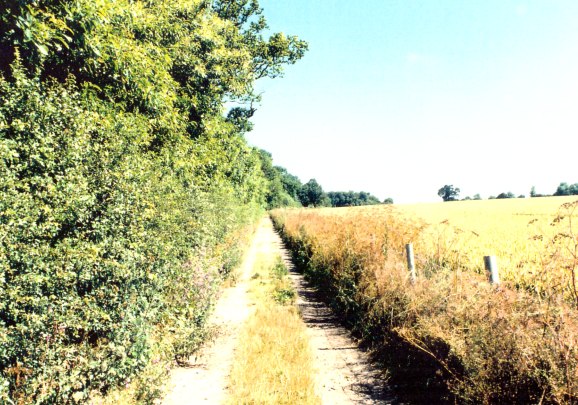
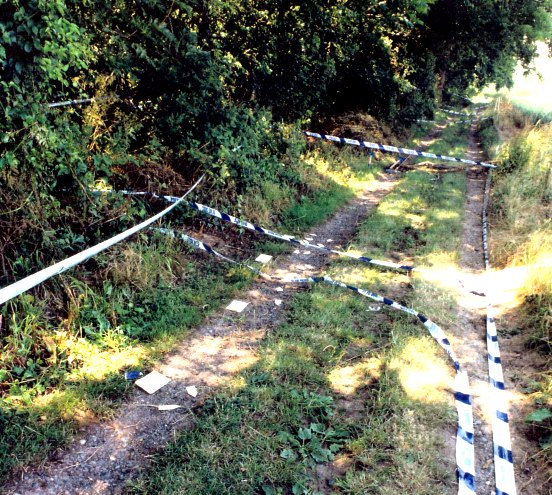
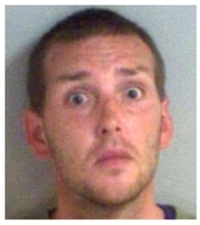
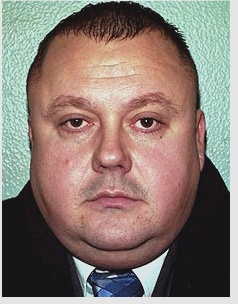
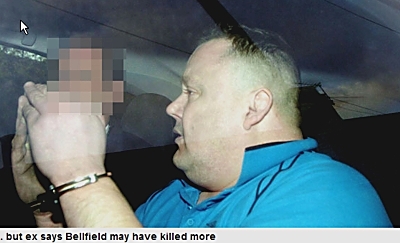
Levi Bellfield was convicted in February 2008 of a number of murderous attacks on young women, whom he would approach at random in a car before attacking them with a hammer. His conviction throws a new light on the Chillenden Murders case. On 6 September 2021 Mr Bellfied publicised his own 'confession' of having visited Cherry Garden Lane on the day of the crime, but denies any involvement in the crime itself and in April 2023 has apparently made another confession. Despite such statements, one must continue to keep an open mind in regard to this case and what follows must be considered in the light of that fact. An 'agitated' man driving away from the
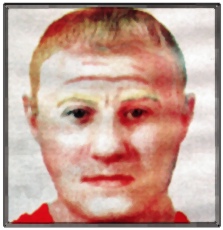
crime scene had a "round red face with podgy cheeks and short gingery-blonde hair in a
straight fringe. He was aged between 20-30yrs". (Levi Bellfield photos and
witness descriptions). Several witnesses saw a "beige/butterscotch Ford Escort-style family saloon"
in the vicinity. Josie Russell said the murderer got out of his car and assaulted her when she tried to run away. He was "clean-shaven with yellow hair, about
25 yrs old, and a tall man, like my father " (6'). She
used her thumb and finger to draw up her hair and said "his hair was kind of spikey". She also stated that his build was "similar" to
the interviewing detective (weight: 20 stones).
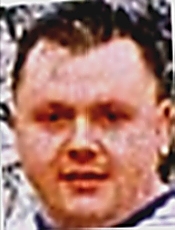
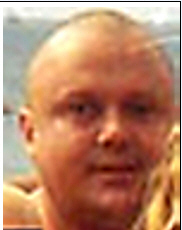
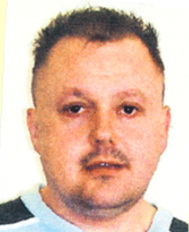
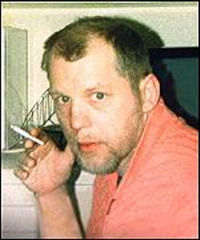
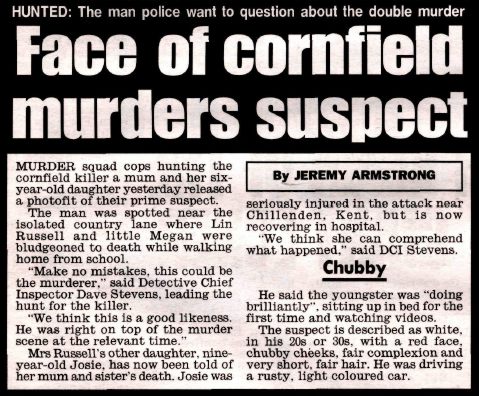
E-fit of the Chillenden murderer compared with Levi Bellfield in June 1996 aged 28yrs old (and at 33 yrs and 39 yrs old). Notice the "chubby cheeks" and "spikey, fashionable, gelled, flicked up, cropped hair" described by witnesses. SPOT THE DIFFERENCE Levi Bellfield is 6' 1" tall and would have been 28yrs old at the time of the crime. He bears a strong resemblance as he then looked to various witness descriptions of the main suspect. (Bellfield photos and witness descriptions). It is yet to be established whether Bellfield had adopted his 'blonde' look in July 1996, but family sources have confirmed that he used to bleach his hair regularly. His facial characteristics compared to the police E-fit merits further investigation regardless of his hair colour in the summer of 1996. The police said when issuing the e-fit: "make no mistake, this could be the murderer." If Josie Russell was right about the murderer's build and height- and she would know because she was in direct physical contact with him - this could explain why she was unable to pick out Michael Stone in an identity parade: she was looking for a much heavier and taller man - "like my father."Michael Stone was then 36yrs old and is 5' 7" tall. He was noticeably older and shorter than either Josie's father or Bellfield. His hair was receding and mid-brown and he does not have the telling features of "podgy cheeks", whereas Bellfield does. A single fingerprint impressed in blood was found on Josie Russell's green lunchbox and there was a suggestion that the perpetrator may have rummaged through the victims' belongings. That fingerprint did not belong to Stone, but the prosecution suggested that it could have been made by Lin Russell. DNA found on a shoelace left at the scene of the crime did not belong to Stone - but the prosecution said it might have belonged to a friend of Stone, since the lace had three knots in it which could have been used by a drug user. Anne Rafferty QC said when deciding to prosecute Michael Stone that "he was not forensically linked to the murder scene" but "cases such as these, in my experience, often shift a little, even a lot, as they progress. Albeit not the strongest, there is a realistic prospect of a conviction, though it could easily improve, and just as easily diminish, during a trial."
Levi Bellfield's former partner Johanna Collings stated that he would frequently assault her by tying a belt around her neck (a propensity to bind his victims). Significantly, he also drove her beige Ford Sapphire car in the summer of 1996. Bellfield could assume an aura of cunning 'charm'. The perpetrator said to the Russell family "I'm just going to tie you up, but you can free yourself later". The use of a vehicle to stalk victims before attacking them with a hammer is a unique hallmark of Bellfield's modus operandi; and his predeliction for accosting school girls in uniforms is well established. In a separate case on 15th October 2001 - five years after this crime - 17 year old Anna-Marie Rennie gave a description of her attacker: He was about "6' 3" tall, 25 yrs old, with short blond hair and a round fat face." The man fitting this description turned out to be Levi Bellfield, who admitted to being at the scene of the attack although he blamed his friend for the assault. The question for the police to investigate is whether Bellfield was in the Chillenden area close to Canterbury in Kent on 9th July 1996. If he was not responsible for the Chillenden Murders then it means another 6' tall man with 'podgy' cheeks, "yellow hair" and a 'short, straight fringe' was also driving around with a hammer looking for schoolgirls to murder. The solution of this crime will require a fresh approach rather than a reliance on a patently bogus confession. Kent police may not be looking for anyone else - and indeed they stopped searching for the perpetrator the moment they arrested Michael Stone in 1997 (26 years ago); but there is as much chance of Michael Stone being the murderer, as the judge who sentenced him.
The psychic detective Nella Jones
predicted in 1997 that the murderer has a brightly coloured tattoo on his left shoulder
LINKS NOTES: (1) March 1999 - The Guardian (15/3) - Mrs Batt refuses to speak to her daughter. "I disowned her because of her lying. If Mick done it, he wants cutting up in little pieces and put down a sewer. All right, he's a psycho, but he didn't kill them. They had no forensics and people lied in the witness box for money. Me and my husband are the only two out of the whole lot who haven't sold our souls." (2) Feb 2009 - A Scotland Yard task force is investigating Bellfield in relation to as many as 20 unsolved crimes, including murders, rapes, and a number of hammer assaults. These include the murder of Bellfield's school friend Patsy Morris, 14, who was strangled in Hounslow in 1980, as well as hammer attacks on women in south-west London in 1994 and 1996. There are also attacks in Blackpool, where Bellfield went on holiday, and in Sussex, where he worked. (3) March 2010 - the CCRC have requested to examine the 99cm bootlace found at the scene of the crime which was dropped by the murderer while making his getaway. (4) October 2010 - The CCRC have confirmed that the bootlace has been 'lost'. The Forensic Science Service state that they would have returned the whole lace to Kent Police in 1998, but when it was retrieved for further examination in 2010, only small fragments of previously examined lace remained, while the 80 cm long section of lace had been mislaid. (5) May 2011 Levi Bellfield has been tried for the attempted kidnapping of Rachel Cowles on 20th March 2002 and the murder of Milly Dowler on 21st March 2002 - as in the Chillenden Murders case, both girls were approached while they were walking home from school wearing school uniforms. CPS Announce Milly Dowler Charges (6) 23rd June 2011 - Levi Bellfield is found guilty of the murder of Milly Dowler. (7) 5th March 2012 - Kent police have provided authority to Mr Stone's defence team to examine the forensic case files held by the Forensic Science Service. (8i) 20th July 2012 - Kent police have reversed their decision to provide authority to access the DNA test results stored in the archives of the Forensic Science Service. (9) 14th April 2013 - A Judicial Review oral hearing is to take place in the High Court on 11th June 2013, which challenges the decision of Kent Police's refusal to allow access to the forensic case files. (10) 30th September 2013 - The JR application was refused as being "totally without merit" PDF (11) 8th October 2013 - Mr Stone's legal team intend to present a fresh application to the CCRC on the basis of the DNA findings discovered on the towelling strips in 2010. (12) 15 August 2017 - Mr
Stone makes a new application to the CCRC based on fresh evidence. (14) 6 September 2021 - Levi Belllfield 'confesses' in a statement to having visited Cherry Garden Lane. (15) 24 April 2023 - Levi Bellfield confesses to the murder. DNA The primary exhibit in the case was a 1m long black bootlace which was dropped at the scene of the crime by the perpetrator. The lace was used to strangle Megan Russell. Multiple male DNA readings of D19 -12,14 were detected at various points along the lace, but that reading is not within Stone's profile. The CPS and the police suggested that the DNA must have come from one of Stone's fellow drug addicts while it was being used as a tourniquet; which was why Stone's DNA was not on the lace. The same reading D19-12,14 was however detected at both ends of the girls' swimming towel, which was torn into strips by the perpetrator. Male DNA of THO1- 6 was also detected on both ends of these strips. The last person to handle the black lace and the ends of the towelling strips was the perpetrator. These readings of D19 - 12,14 and THO1- 6 may therefore belong to the perpetrator's profile. They are not within Michael Stone's profile. It is not feasible to ignore the significance of these DNA readings, which point towards an unknown assailant.
|
|||